Sleep science and mattress education
Naturepedic Halcyon Explained: Understanding Mattress Feel, Support, and Materials
A mattress is not simply firm or soft. Its feel emerges from materials, layers, pressure, temperature, and the particular body asking it to do a job. Understanding those interactions makes it easier to assess a Naturepedic Halcyon mattress—or any other mattress—without expecting a single label to tell the whole story.
The puzzle hidden inside a firmness label
“Firm” and “plush” are useful words until they are asked to settle an argument. One sleeper calls a mattress supportive; another calls the same surface unforgiving. A person who sleeps on their back may welcome a stable, even plane, while a side sleeper may notice pressure at the shoulder and hip. The mattress has not changed. The body meeting it has.
This is why firmness labels should be treated as shorthand rather than verdicts. They usually describe an overall impression, often on a scale set by a manufacturer or retailer. They do not reveal exactly how a mattress will respond to different body shapes, positions, or temperatures. Nor do they tell the whole story of what lies beneath the cover: the order of the layers, their thickness, or how quickly they give way and recover.
Naturepedic Halcyon is a useful name to consider in this broader conversation because it invites questions about construction as well as comfort. The most reliable approach is not to assume that a line name guarantees a particular sensation. Mattress collections can include different models or configurations, and details may change. Instead, examine the specifications of the particular Halcyon model under consideration, then connect those details to the way you sleep.
That shift—from “Is it firm?” to “How does it respond where my body needs it?”—is more than a matter of vocabulary. It turns a purchase decision into a practical inquiry about pressure relief, spinal alignment, movement, temperature, and personal preference.
What people mean when they describe mattress feel
Feel is an impression assembled from several sensations. There is the first contact: the way the cover and upper comfort layers meet the skin and clothing. There is the slower response as the sleeper’s weight settles into the bed. And there is the underlying support—the sense that the body is held evenly rather than sinking too far or meeting an abrupt, hard stop.
Some materials respond quickly, giving a buoyant or springy impression. Others compress more gradually and may contour closely around the body. Still others are designed to create a flatter, more stable sensation. These are broad descriptions, not guarantees. A material’s feel depends on its formulation, thickness, density, placement in the mattress, and interaction with the other layers. Even the cover can influence the surface impression.
It helps to distinguish surface softness from deep support. A mattress can feel welcoming at first touch yet still provide a stable foundation underneath. Conversely, a surface that seems firm when pressed by hand may respond differently when a person lies on it for several minutes. A quick showroom test can provide clues, but it cannot reproduce every night’s experience—or every sleeper’s.
Movement matters, too. When one person changes position or gets out of bed, the mattress may transmit more or less of that movement across the surface. The degree of motion transfer depends on construction and is especially important to people sharing a bed. Ease of changing positions is another part of feel: a close-contouring surface may feel enveloping to one sleeper and restrictive to another.
When reading about Naturepedic Halcyon, look for concrete construction information rather than relying on a single adjective. Which materials are used? Where are they placed? How thick are the comfort and support sections? Are there different firmness choices? If a description does not answer these questions, the gap itself is worth noting and investigating through current product specifications.
Support is about alignment, not hardness
In everyday speech, “supportive” often gets mistaken for “hard.” The distinction matters. Support describes how well the mattress helps maintain a comfortable, reasonably neutral position as the body rests. Firmness describes the perceived resistance of the surface. The two are related, but they are not interchangeable.
A mattress that is too soft for a particular sleeper may allow the heavier parts of the body to sink farther than the rest. One that is too firm may leave gaps beneath areas that need contact, or create uncomfortable pressure at prominent points. Neither outcome can be predicted by firmness alone. Body proportions, sleep position, and individual sensitivity all shape the result.
Back sleepers often pay attention to whether the surface feels even beneath the torso and hips. Side sleepers may be especially alert to pressure around the shoulder and hip, which press more directly into the mattress. Stomach sleepers may prefer a surface that prevents the midsection from sinking excessively. These are starting points, not rules: people change positions, and preferences vary widely.
For couples, the decision becomes a small negotiation between different bodies and habits. Weight, preferred position, sensitivity to motion, and temperature comfort can all differ. The question is not necessarily whether one mattress is perfect for both people, but whether its design offers an acceptable balance. If the mattress can be configured in more than one way, confirm the available options and the terms that apply to the specific model.
It is also useful to consider the foundation beneath the mattress. A base that is incompatible, uneven, or poorly supported can change how a mattress performs and may affect its longevity or warranty conditions. Check the manufacturer’s requirements for the exact model rather than assuming all bases are equivalent.
Materials tell a story—but not the whole story
Material names can sound like answers. In practice, they are the beginning of one. A natural or plant-derived material, for example, does not by itself reveal how a finished mattress will feel. Processing, layering, thickness, density, and the materials surrounding it influence the experience. Two mattresses that list similar components can still behave differently.
For that reason, a useful examination of a Naturepedic Halcyon model begins with its complete layer description, not just a headline claim. Find out what is in the comfort layer, what provides the deeper support, and how those sections are arranged. Ask whether the materials are listed by exact type and whether specifications differ among sizes or configurations. If a detail matters to you—such as a particular fiber, foam, or treatment—look for clear documentation rather than inferring it from a broad category label.
Material information also has a practical dimension. Ask how the mattress should be cared for, whether it can be rotated, and whether it is intended to be used with a particular foundation. Check the warranty and trial terms as carefully as the construction. A mattress is a long-term household object; the instructions and policies that govern its use are part of the decision.
People may also have questions about odors or sensitivity to materials. New products can have a noticeable smell, and individual reactions differ. If this is a concern, seek current, model-specific information from the manufacturer and allow for any recommended airing period. Avoid treating a general description as medical advice, and consult an appropriate health professional about persistent symptoms or specific health concerns.
There is a useful discipline in separating what a material is from what it promises. A label can identify composition or a certification, but it cannot guarantee that a sleeper will feel cool, wake without discomfort, or sleep better. Those outcomes depend on more than the mattress, and they cannot be responsibly promised on the strength of materials alone.
Temperature, pressure, and the bedroom around the bed
Sleep comfort does not happen in isolation. A mattress is one element in a small climate made up of a sleeper, bedding, room temperature, airflow, and personal tendencies toward warmth or coolness. A surface that feels comfortable during a brief afternoon test may feel different after several hours under a duvet.
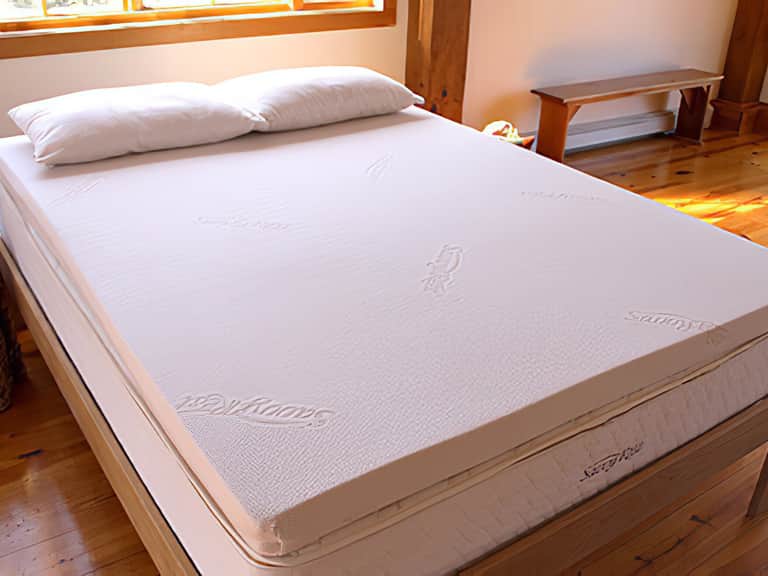
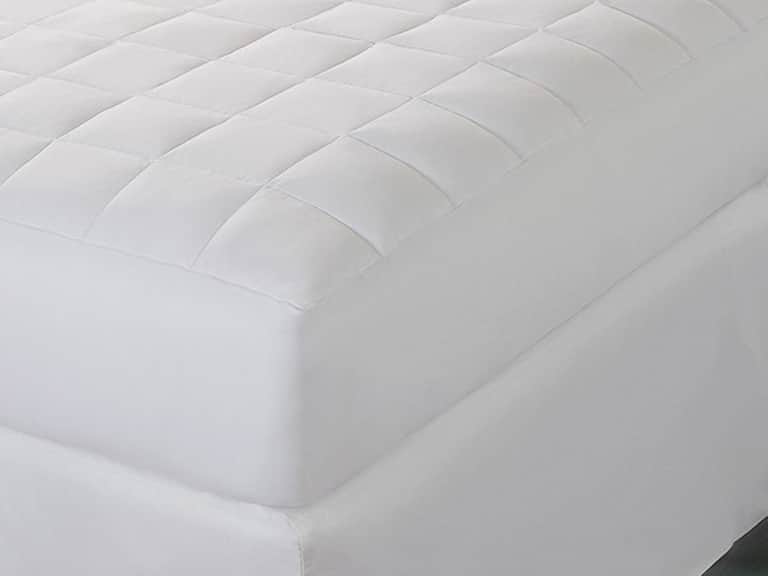
Layering affects that climate. Mattress protectors, pads, sheets, and comforters add their own textures and may alter airflow or the first impression of the mattress. A thick, quilted pad can soften a surface. A thin protector may have a more subtle effect, though its fabric and construction still matter. If you already own a mattress whose basic support feels right but whose surface feels too firm, a topper may change the comfort layer; it will not necessarily correct a deeper mismatch in support.
Pressure is similarly personal. The sensation at a shoulder or hip can depend on sleep position, the contour of the body, and how the upper layers distribute weight. A firm surface is not automatically better or worse for pressure relief. The important question is whether the sleeper can settle comfortably without persistent pressure that prompts repeated repositioning.
Try to assess the mattress in the context in which it will be used. If possible, test it in your usual sleep position and remain still long enough to notice what happens after the initial impression fades. Consider your ordinary pillow and bedding, since they affect alignment and comfort. A pillow that is too high or low, for instance, can create discomfort that is mistakenly attributed to the mattress.
A practical way to compare a Halcyon mattress
Comparison becomes clearer when it is organized around the sleeper rather than a brand’s adjectives. Before shopping, note what currently works and what does not. Do you wake with pressure at a particular point? Feel that your body sinks too far? Get warm during the night? Notice movement from a partner? These observations are more useful than a vague wish for a “better” mattress.
- Start with position. Identify the positions in which you spend most of the night, while allowing for the fact that people move.
- Name the discomfort precisely. Distinguish surface pressure from a sense of sagging, and both from aches that may have causes unrelated to the mattress.
- Read the layer specifications. Look for materials, placement, and thickness for the exact Halcyon configuration—not only general descriptions of the collection.
- Compare the full experience. Consider temperature, motion, ease of changing position, edge use, and the bedding you plan to use.
- Verify logistics. Review delivery, setup, foundation compatibility, trial or return conditions, warranty terms, and care guidance.
- Allow for adjustment. A new mattress may feel unfamiliar. Use the stated trial and return policy, if one applies, and follow the manufacturer’s guidance rather than making a decision from a single brief test.
Where possible, compare mattresses under similar conditions. A plush showroom pillow, a different foundation, or an unusually warm room can distort the test. Take notes immediately after trying each option: where the body feels supported, where pressure is noticeable, and whether changing position feels easy. Memory is a poor measuring instrument after a day of testing surfaces that all come with persuasive descriptions.
How to read claims with a cool head
Mattress language often moves between engineering and metaphor. “Cloud-like,” “weightless,” and “perfect alignment” are vivid, but they do not tell you how a mattress is built or whether it will suit you. Treat such phrases as descriptions of an intended impression, not as measurable outcomes.
More useful claims are specific and verifiable: a clear list of materials, dimensions, care instructions, compatibility requirements, and warranty terms. Certifications may provide information about a particular material or manufacturing standard, but their meaning depends on the scope of the certification. Read what the credential covers rather than assuming it certifies every aspect of the mattress or proves a health benefit.
It is also reasonable to ask when a product description was last updated. Product names can remain familiar while details evolve. If a specification is central to your decision, confirm it directly through current documentation for the model and size you are considering. This is especially important when comparing older reviews with present-day listings.
A buyer-agnostic approach does not mean every mattress is interchangeable. It means the comparison should rest on transparent facts and the needs of the person who will sleep on it. The most expensive construction is not automatically the best fit; nor does a particular material guarantee a particular night.
The mattress is one part of sleep
A comfortable sleep surface can help create a bedroom that feels inviting, but it cannot single-handedly solve every sleep difficulty. Light exposure, noise, room temperature, schedule, stress, health conditions, and daily routines can all affect sleep. If a problem is persistent or substantially affects daily life, consider speaking with a qualified health professional rather than treating a mattress purchase as a substitute for care.
This broader view is not a reason to dismiss the mattress. It is a way to keep expectations proportionate. A well-matched surface may make it easier to settle comfortably; it cannot promise a cure, a particular number of uninterrupted hours, or the same outcome for every person. The value of a thoughtful decision lies partly in avoiding claims that no bed can reliably fulfill.
Frequently asked questions
Does “firm” mean a mattress offers better support?
No. Firmness describes how resistant a surface feels; support concerns how the mattress holds the body. A very firm surface may not suit every sleeper, and a softer comfort layer can sit above a supportive foundation. Evaluate both qualities separately.
Can the name Naturepedic Halcyon tell me exactly how a mattress feels?
Not by itself. Confirm the specifications of the specific model and configuration. Layer arrangement, materials, and available firmness options may determine the experience more precisely than the collection name.
Should side sleepers always choose a softer mattress?
Not automatically. Side sleepers often pay close attention to pressure at the shoulder and hip, but comfort also depends on body shape, position, and the mattress’s response. A hands-on test or a clearly described trial policy can help assess the fit.
Can a mattress pad change how a mattress feels?
Yes. A pad can add surface cushioning or change the texture of the bed. It is less likely to resolve a deeper problem with alignment or support. Consider whether the discomfort comes from the top feel or from how the mattress supports the body underneath.
What should I check before purchasing?
Review the exact construction, dimensions, foundation requirements, care instructions, warranty, delivery arrangements, and any trial or return terms. If a material or certification is important to you, confirm its meaning and applicability for the particular model.
A better question than “Is it comfortable?”
Comfort is not a single property waiting to be printed on a label. It is an exchange between a mattress and a sleeper, shaped by pressure, position, temperature, materials, and habit. Naturepedic Halcyon can be assessed more thoughtfully by looking at its exact construction and asking how that construction corresponds to the experience you want: a surface that cushions without swallowing, support without harshness, or a sleeping climate that feels balanced.
The useful question is not whether a mattress is universally comfortable. There is no such bed. Ask instead whether its documented materials and design address your priorities, whether its feel suits your body when tested in a realistic way, and whether the terms around purchase give you a fair opportunity to evaluate it. That is a less glamorous method than trusting a promise. It is also a more dependable one.